2026-10-26 ·
Sewer Camera Inspection in Casa Grande: When It Pays Before You Buy a Home
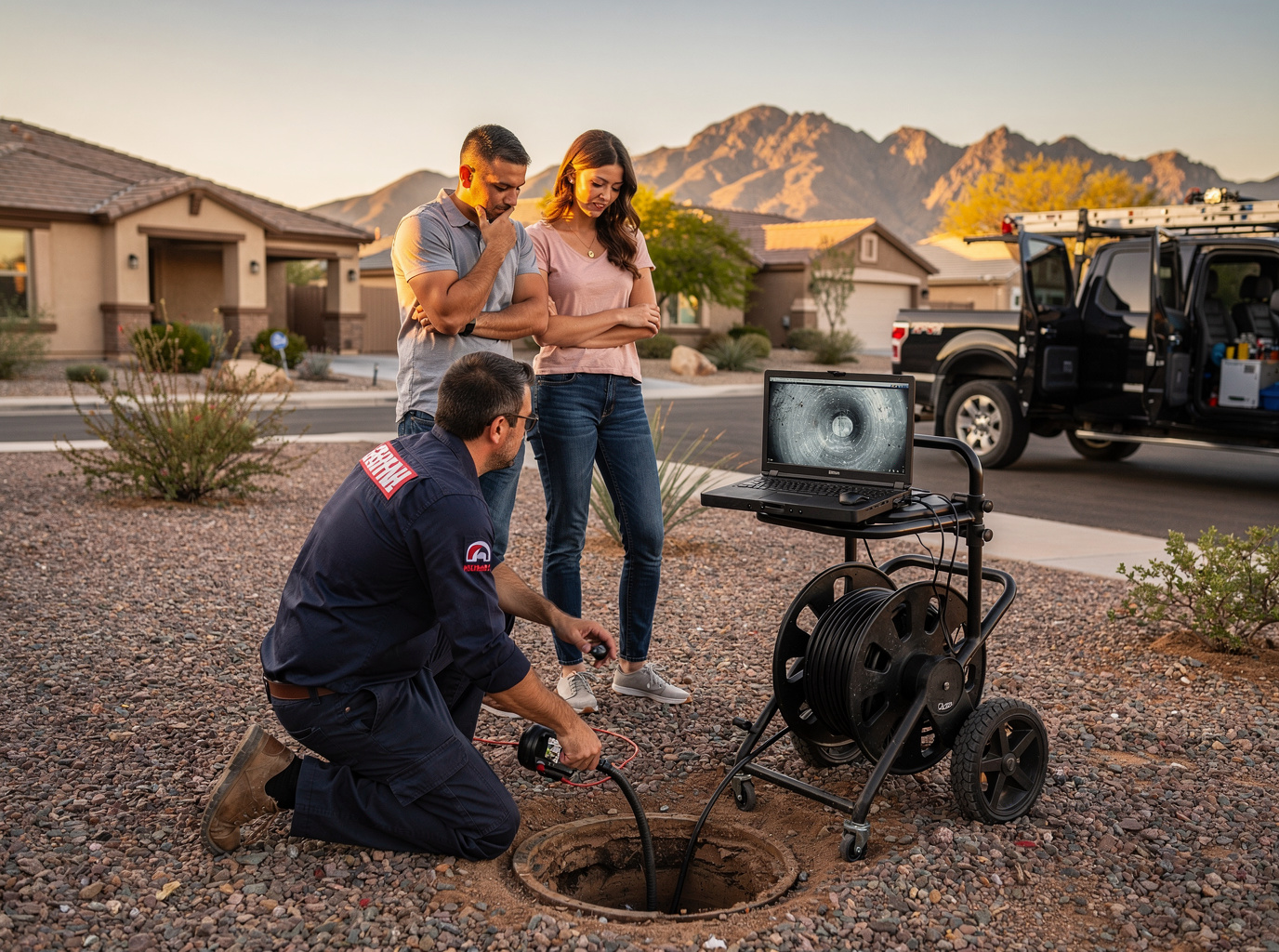
A sewer camera inspection in Casa Grande costs $300 to $600 and pays for itself before a home purchase when it uncovers root intrusion, cracked pipes, or offset joints that would require sewer line repair after closing.
Why Inspections Pay Off Before Closing
Homes in Casa Grande Village and Mission Royale often sit on lines installed decades ago that shift in the extreme summer heat. A camera run shows exactly where clay or cast iron has failed without any digging. Buyers who skip this step frequently face $4,000 to $12,000 in emergency work once they move in. The inspection takes one to two hours and gives a recorded view of the entire line from the cleanout to the street. In Pinal County, where summer temperatures push pipe expansion and contraction, these visuals catch problems that a standard walkthrough misses.
Common Issues Found in Local Homes
Root intrusion from desert landscaping appears often on lines serving older properties near the Casa Grande Ruins National Monument. Offset joints and bellies develop where soil settles after monsoon rains. Corrosion shows up on cast iron sections that have been in the ground since the 1970s or 1980s. In nearby Maricopa and Coolidge, similar footage regularly reveals partial collapses that slow drainage but do not yet back up into the house. Spotting these conditions early lets buyers negotiate repairs or walk away before the deal closes.
Cost Factors That Affect the Price
Length of the line, depth of the cleanout, and whether the crew must clear access first all move the total. Properties near Francisco Grande Hotel & Golf Resort sometimes need extra footage because lots sit farther from the street. Adding a written report with still images adds $75 to $150. When the inspection leads directly to sewer line repair, some companies credit part of the inspection fee toward the larger job. Prices stay consistent across Pinal County because the same soil and climate conditions apply from Casa Grande to Coolidge.
How the Process Works on a Typical Lot
The technician inserts a flexible camera head into the exterior cleanout and pushes it toward the main. Real-time video appears on a monitor so the buyer can watch for cracks, roots, or standing water. The crew notes distance markers so any problem can be located later without guesswork. After the run, the company that serves your ZIP code provides a digital copy and a written summary. This record becomes useful during negotiations with the seller or when scheduling follow-up work such as hydro jetting if roots are present.
When to Book the Inspection
Schedule the camera run after the initial offer is accepted but before the inspection contingency expires. In Casa Grande’s hot desert climate, lines can look fine on the surface yet fail within months of heavy use. Waiting until after closing leaves the new owner responsible for fixes that could have been addressed in the purchase agreement. Pairing the sewer camera with a standard home inspection gives a fuller picture of both interior plumbing and the underground line.
FAQ
What does a sewer camera inspection actually show? It reveals cracks, root growth, offset joints, and collapsed sections along the pipe run from the house to the street.
How long does the inspection take? Most runs finish in 60 to 90 minutes once the technician reaches the cleanout.
Can I use the footage to negotiate repairs? Yes. Sellers often agree to cover fixes when clear video evidence shows problems that existed before the sale.
Is the inspection useful on newer homes? Even homes built in the last 15 years can develop bellies or joint issues in Pinal County soil, so the footage still provides value before closing.