2026-10-26 ·
Why Casa Grande Pipes Burst and How to Prevent It
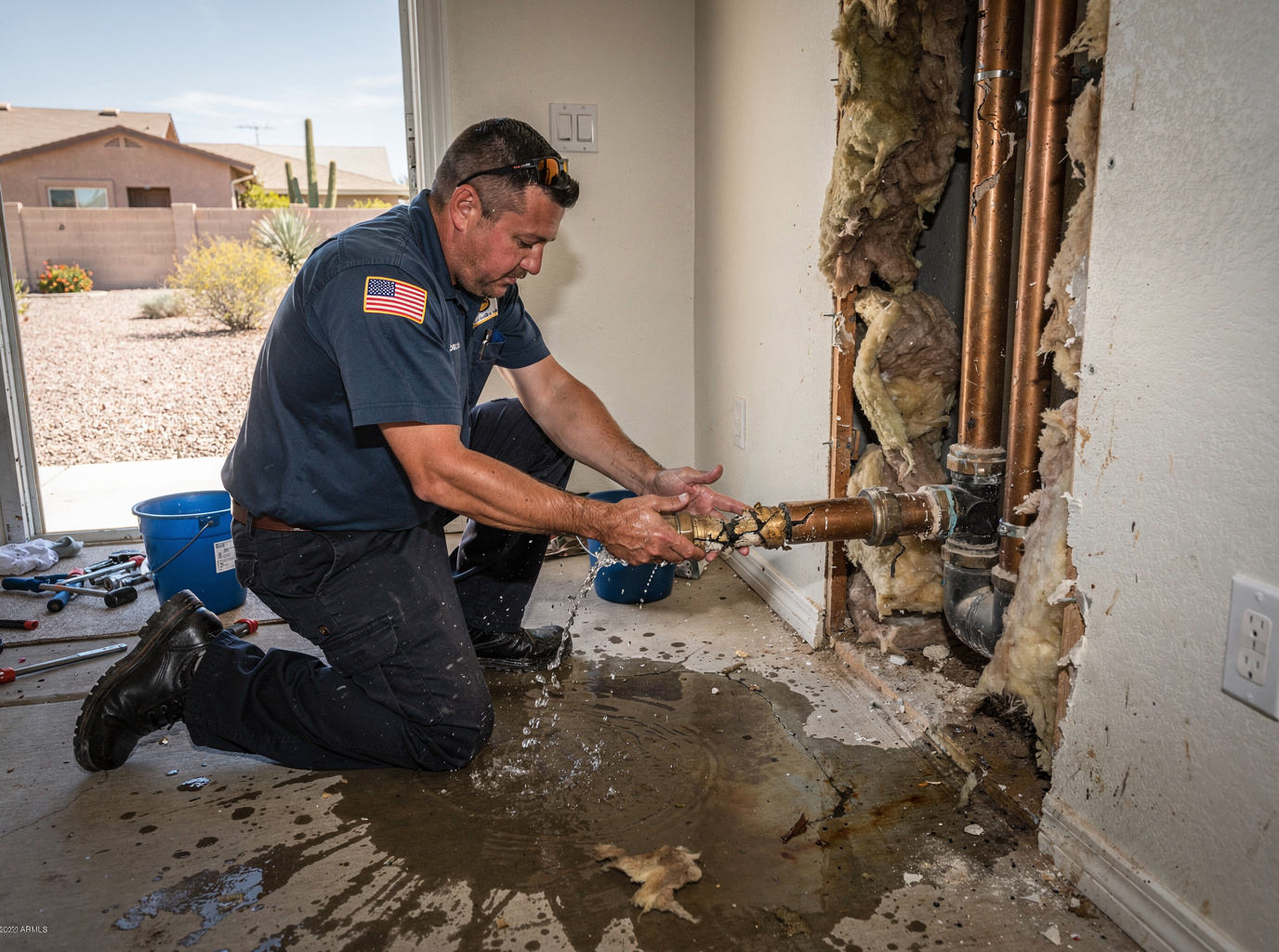
Casa Grande pipes burst most often when extreme summer heat drives repeated expansion and contraction in metal lines that have already lost flexibility. In Pinal County homes built decades ago, this cycle weakens joints first, especially where water pressure spikes during peak demand.
Emergency Plumber Casa Grande Pipe Failures
Summer temperatures above 110 degrees push copper and galvanized lines past their limits in neighborhoods such as Mission Royale and Casa Grande Village. The ground shifts slightly as surface heat radiates downward, adding stress at elbows and tees. Homes near the Casa Grande Ruins National Monument often sit on older lots where original plumbing dates to the 1970s or earlier, making those sections more prone to sudden splits. Nearby cities like Maricopa and Coolidge report the same pattern once irrigation demand rises and static pressure climbs. A single unnoticed pinhole can release several gallons per minute once the line fully separates. The company that serves your ZIP code responds to these failures by isolating the damaged section and restoring flow with targeted replacement rather than full repiping on the first visit.
Common Triggers in Local Homes
High heat accelerates corrosion on older galvanized sections still found in many Pinal County residences. When daytime highs drop sharply at night, the contraction pulls fittings apart at their weakest points. Tree roots seeking moisture near Francisco Grande Hotel & Golf Resort properties can also press against shallow lines and create stress fractures. Hard water deposits narrow the interior diameter, forcing pumps to work harder and raising pressure on remaining pipe walls. Slab leaks develop when these conditions combine under concrete floors common in Mission Royale construction. Slab Leak Signs in Casa Grande Homes and How They Are Found explains how to spot moisture before a full burst occurs.
Prevention Steps for Casa Grande Residents
Insulate exposed pipes in attics and garages with closed-cell foam sleeves rated for desert temperatures. Schedule an annual inspection of shut-off valves and water heater connections before June. Replace rubber hoses on washing machines every three to five years, as heat degrades them faster than in milder climates. When repiping becomes necessary, compare copper and PEX options suited to local soil conditions in the article Repiping an Older Casa Grande Home: Copper vs PEX. Keep irrigation timers set to early morning hours to limit pressure swings during the hottest part of the day. These measures lower the chance that the company that serves your ZIP code must perform an unplanned plumbing repair after a weekend rupture.
When to Arrange Service
Persistent damp spots on walls or ceilings, unexplained drops in water pressure, and audible hissing behind fixtures all indicate a line nearing failure. Acting before a full burst limits water damage and keeps repair costs between $400 and $1,500 for most localized fixes in Casa Grande. The company that serves your ZIP code provides a written estimate after locating the problem and discusses whether hydro jetting or a camera inspection will prevent recurrence.
FAQ
How quickly do temperature swings affect pipes? Daily swings of 40 degrees or more in summer months accelerate joint fatigue within two to three seasons on uninsulated lines.
Do newer homes still experience bursts? Even post-2000 construction can fail if water pressure exceeds 80 psi or if tree roots reach shallow supply lines.
What does a typical localized repair cost? Most single-section replacements fall in the $400 to $1,500 range depending on access and pipe material.
Can insulation alone prevent bursts? Foam sleeves reduce heat transfer but do not address existing corrosion or high pressure; both factors usually require additional steps.